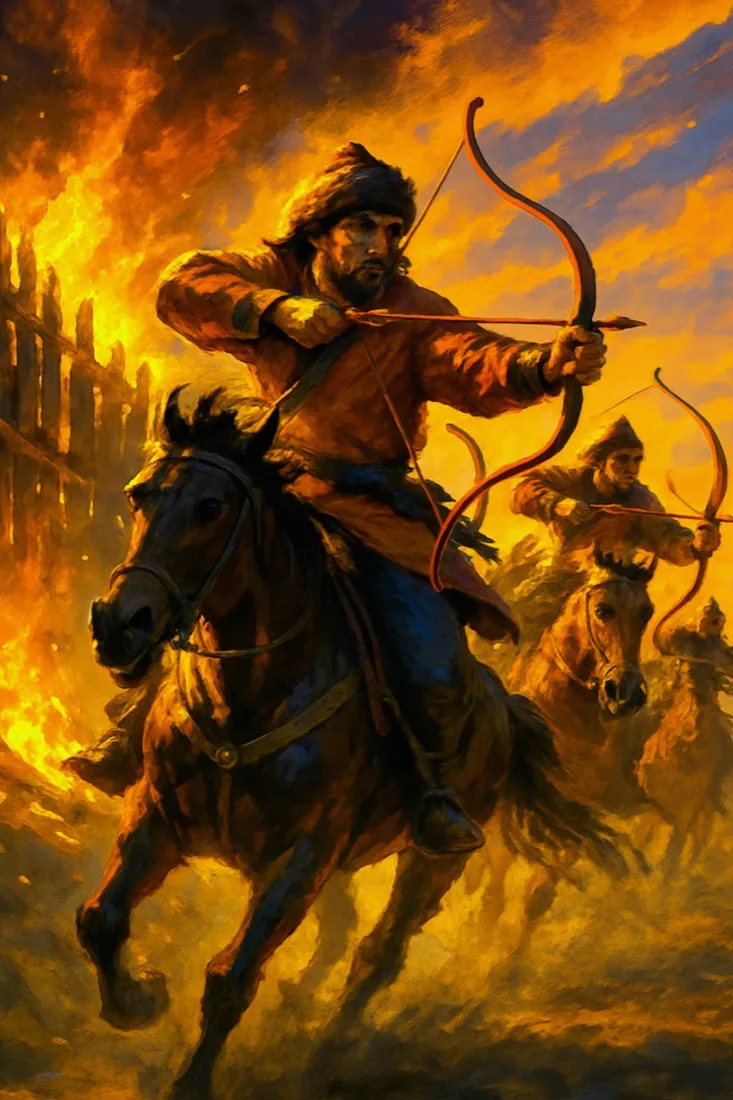
Your first real war is where most players learn their hardest lessons. This guide walks through the planning that turns a hopeful march into a successful siege.
Why the first war usually goes wrong
Almost every strategy player remembers their first big loss. It usually follows the same pattern: a target that looked weak, an army that felt strong and a march sent on instinct rather than information. The report arrives, the numbers are ugly, and days of training have vanished in a single exchange. The good news is that this lesson can be learned on paper instead.
The games on our shelf differ in detail, but they share a principle: information beats force. Khan Wars builds its entire battle system around spying. Throne: Kingdom at War gives you scouts as a dedicated troop class. KingsAge resolves battles in plain reports that reward anyone who did the arithmetic beforehand. The common thread is that wars are won before the march leaves the gate.
So treat your first war as a project rather than an impulse. Pick a target, gather intelligence, plan your forces, protect your home and only then commit. It sounds slow, and it is, but the alternative is losing armies you cannot afford and spending the following week rebuilding instead of growing.
Choosing a target worth the trouble
Start by asking what you want from the war. Resources to fund growth? Territory with a useful bonus, such as the special resources in Imperia Online? A rival who has been raiding your clan? Each goal points toward different targets, and a war without a clear goal tends to drift into costly stalemate.
Prefer targets that are inactive or poorly defended over those that are simply small. A small but active player will rebuild, retaliate and call for help. An inactive one will not. Many games also offer computer-controlled targets, such as the Bandits in Khan Wars or the barbarian-held castles in KingsAge, which are ideal for practising without provoking a human neighbour.
Check the politics, too. Attacking a member of a strong clan invites a response from the whole group, while attacking a clanless player usually stays a private affair. Before any significant march, mention your plan in your own group’s chat. Someone may know something you do not, and in many clans unannounced attacks are against the rules anyway.
Scouting like you mean it
A scouting report tells you what a target holds now, not what it will hold when your army arrives. Scout as close to your attack as practical, and if time passes before you march, scout again. Many of our own early losses came from acting on reports that were a few hours old, during which the target had trained, reinforced or been helped by an ally.
Read the report for more than troop numbers. Look at defences, stored resources and anything hinting at reinforcements. A target with full storage and thin defences is an invitation; one with empty storage and a strong wall is a trap that will cost you more than it pays. If the report leaves you uncertain, that uncertainty is itself information.
Share reports with your group. Other members may be planning around the same target, and a pooled picture of the neighbourhood is far more useful than scattered personal notes. In clan-centred games such as Vikings: War of Clans, coordinated scouting before a group operation is often what separates a disciplined clan from a merely large one.
Building the right army and timing the march
Once you know what you face, build for it. Most of these games use some form of unit counters, where certain troop types perform well against others. Khan Wars, with its wide roster, rewards careful composition more than any other game here, while Imperia Online’s compact roster of swordsmen, spearmen, archers, cavalry and siege engines still leaves meaningful choices.
Bring siege equipment only when you need it. Siege engines and similar units are powerful against fortified targets but slow your march and add cost. Against an open target they are dead weight. Imperia Online even separates field battles, fortress sieges and pillage into distinct attack types, which is a useful way to think about any war: decide what kind of attack you are making first.
Timing is the final piece. Send forces so they arrive together, and plan arrivals for moments when you can be online to react. A beautifully composed army that lands while you are asleep, with no chance to follow up, wastes much of its potential. The best attacks are those you can watch, read and build upon immediately.
Protecting home while the army is away
Every soldier on the march is a soldier not defending your walls. Before committing a large force, look at your own position the way a rival would. Is your storage full? Are your defences thin? Is anyone nearby likely to notice your army leaving? A successful raid abroad can be wiped out by a counter-raid at home.
Spend resources before you march, so there is less to steal. Keep a defensive core at home, even if it slightly weakens the attack. Let your clan know when your army is away, so allies can keep an eye on your town. These habits feel cautious, but they are what allow experienced players to wage long wars without collapsing.
After the war, take stock honestly. Compare what you gained to what you spent, including time spent rebuilding. Some wars pay; many simply transfer resources from one player to another at a loss for both. The best generals on any server fight fewer battles than you might expect, and they win most of the ones they choose.
Write a short note after each war, even a single line in a text file: what you scouted, what you sent, what came back and what surprised you. Over a few weeks those notes become a personal manual for your realm, more useful than any generic guide because they reflect your neighbours, your server and your schedule. Several of the players on our desk still keep such notes, and they are the ones whose armies rarely come home empty-handed.