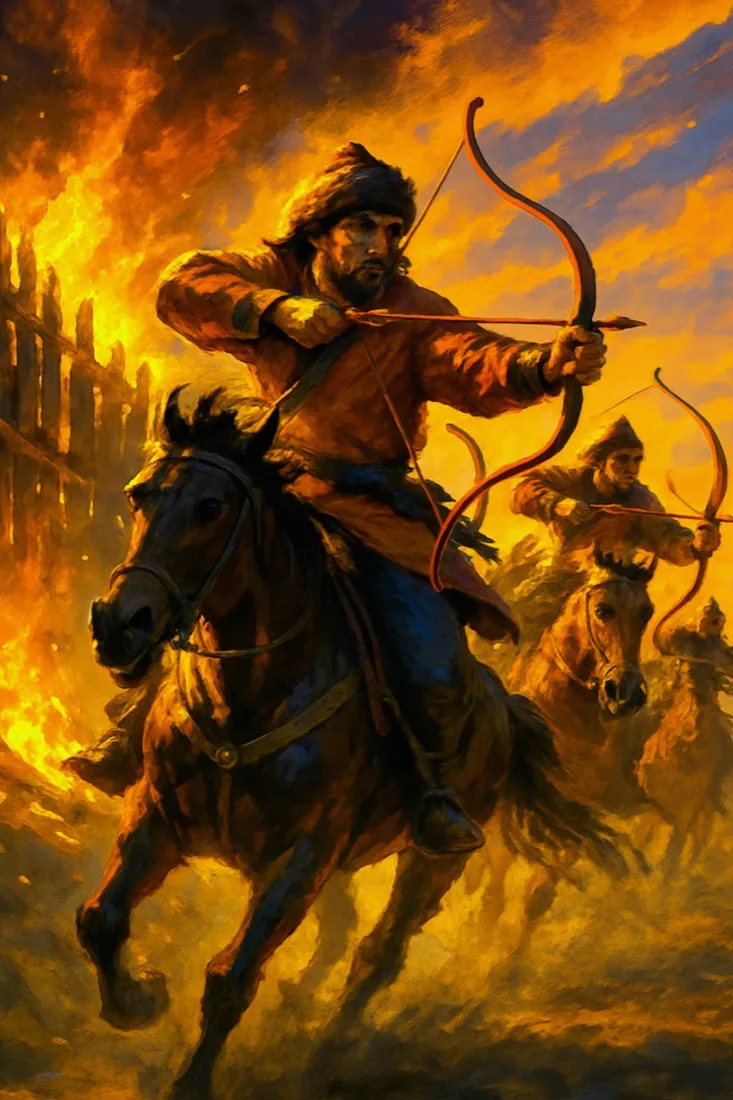
Some strategy games want you to feel powerful within minutes. Khan Wars wants you to feel clever, eventually. It is one of the older browser strategy games still running, from XS Software, a studio that describes itself as a pioneer of early browser-based gaming, and its age shows mostly in the best way: a confident, information-rich design that trusts players to read.
The pitch is straightforward. Pick one of twelve medieval nations, each with a bonus that bends your economy, your battle strength or your trading. Recruit from a roster of up to 28 unit types, including nation-specific specials. Then join a guild, because citadels and territory are taken together. We played on a live world for weeks, and Khan Wars was the game our desk argued about most over coffee.
Twelve nations, twelve different first weeks
Your choice of nation is the first real decision, and it matters. Bonuses that favour economy, combat or trade push you toward different openings, and specialized units become available as you progress, nudging your tactics further. Two players starting side by side with different nations will have noticeably different first weeks, which gives the game a replay value most of its rivals lack.
We would advise newcomers to pick a nation whose bonus suits how often they log in. Economy bonuses are forgiving for players with irregular schedules, while combat-leaning nations reward those who can keep an eye on targets. There is no wrong answer, only a mismatch between nation and lifestyle, and the game is good at making you feel the consequences of either over the course of a month.
A roster of 28 units and the art of the counter
Infantry, archers, cavalry and siege machines form the core of the roster, with nation-specific units layered on top. Upgrades strengthen attack and defence, and the result is an army builder that rewards understanding over volume. Throwing the largest stack at an enemy works less often than you might hope; bringing the right mix to the right target works far more often.
Bandits scattered across the world give you a place to practise without provoking a real neighbour, and we recommend using them generously. They teach march times, unit strengths and losses at a cost that will not set you back for days. By the time we turned on a human target, we had a clear sense of which units earned their upkeep and which were better left in the barracks.
Spies first, swords second
The official description boasts of an advanced battle system, and the claim we can stand behind is how central reconnaissance is. Spying on opponents is not a nice extra; it is the difference between a raid that pays and a march that dies at the walls. Good players spy, compare, wait and strike, and the game gives you enough information to plan with confidence.
This makes Khan Wars slower than its flashier rivals, but more satisfying. An attack planned from a fresh report, timed so your units arrive together, feels like an achievement rather than a dice roll. It also means the game punishes impatience harshly. More than once we lost a respectable army by skipping a scout because we were sure the target was empty. We were wrong every time.
Guilds, citadels and choosing your world speed
Guilds bring players together under shared leadership to conquer citadels, control territory on the map and spread their influence, with guild chat for real-time planning. Our guild was smaller than the war bands of the Plarium games, but more tactical, and members shared scouting reports freely. Citadel operations were well organized and felt like the culmination of everything the game teaches.
Khan Wars also runs multiple worlds at different speeds, and choosing between them is one of the smartest features on our shelf. Faster worlds compress the campaign and suit players who can visit often; slower worlds give a relaxed pace for those with jobs, kids and a commute on the GO train. Being able to choose the tempo of your war is a gift, and more games should offer it.
Khan Wars: the first week at court
- Compare the twelve nations’ bonuses and pick one that matches how often you can realistically log in.
- Choose a world whose speed suits your schedule before thinking about anything else.
- Practise against Bandits to learn unit strengths, march times and losses without angering neighbours.
- Spy on every human target before attacking, and repeat the scout if time has passed.
- Join an active guild and read its chat to learn how it organizes citadel operations.
What we love
- Twelve nations give genuinely different openings and strong replay value.
- Scouting and unit counters reward careful planning over raw numbers.
- Choice of world speed lets you set the tempo of your campaign.
- Bandits offer a safe training ground for new commanders.
What grates
- Interface feels older and denser than the modern Plarium titles.
- Punishes impatience harshly, which can sting early on.
- Guilds are smaller and quieter than the big clan games.
The jarl Khan Wars rewards
Players who enjoy reading reports, comparing unit stats and timing a strike to the minute. If a well-planned citadel operation sounds more satisfying than a flashy one, Khan Wars is your realm. Those who want instant spectacle should look at the licensed or Norse options first.
Khan Wars: the saga's end
Khan Wars is the thinker’s choice on our shelf. Its twelve nations and wide roster create real variety, its emphasis on spying makes every battle a puzzle, and its world speeds let you choose how hard to commit. The presentation is older and the guilds quieter, but few browser strategy games respect your intelligence this consistently.